Blogs > Mazzotta Rentals News
High-Reach & Rotating Telehandlers
Faster Lifts, Safer Jobs, Smarter Budgets: High-reach and rotating telehandlers for complex construction lifting solutions.
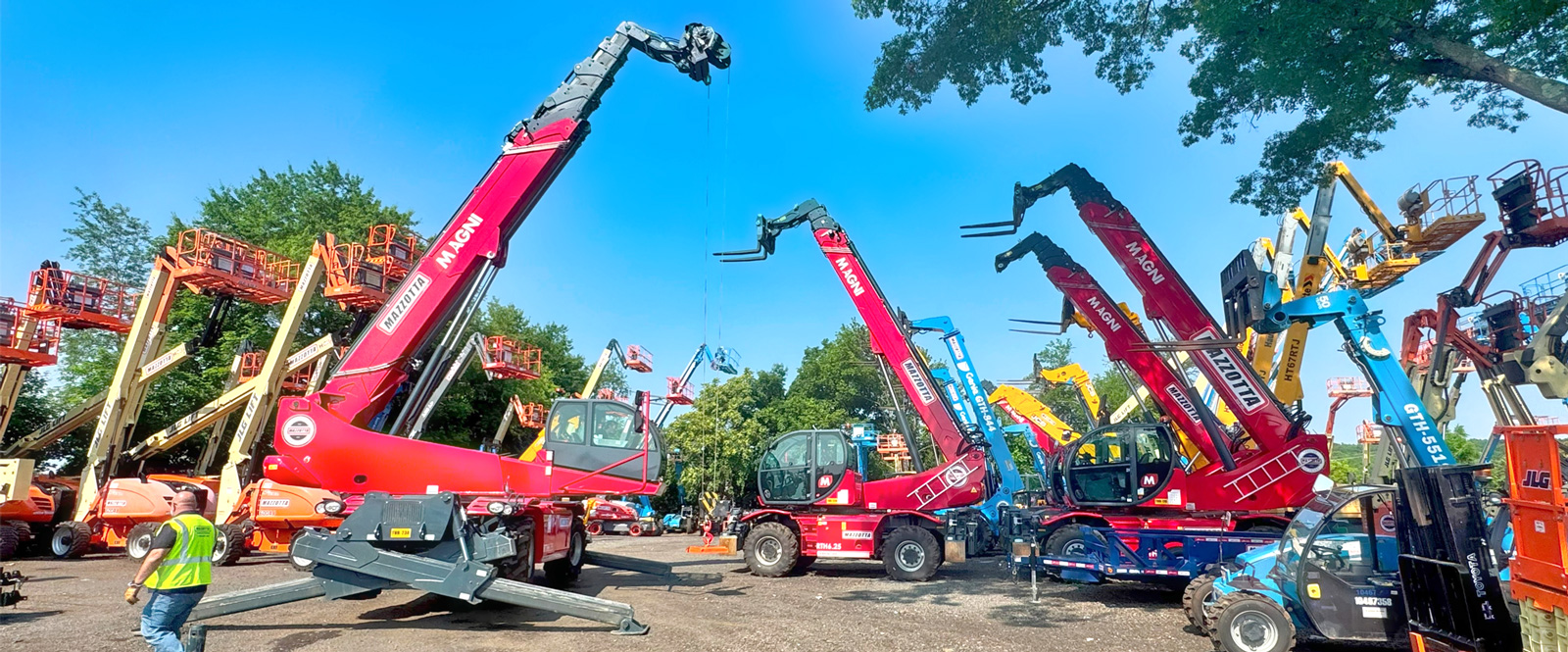
High-Reach & Rotating Telehandlers: Faster Lifts, Safer Jobs, Smarter Budgets
When your schedule is tight and your site is congested, few machines move material more efficiently than a telehandler. Today’s high-reach telehandlers (fixed boom) and rotating telehandlers (RTH) combine crane-like placement with forklift simplicity—letting your crew land heavy loads exactly where the work happens. Here’s why they’re game-changers, how they save time, the safety practices that matter, and how Mazzotta Rentals backs you with expert training and full-service support.
Why Telehandlers Win on Real Jobsites
1) One machine, many tasks.
Swap forks for a truss boom, winch, jib, bucket, or approved work platform and you’ve replaced multiple pieces of iron. That means fewer deliveries, fewer operators to coordinate, and less site clutter.
2) Reach that eliminates re-handling.
High-reach units place bundles to upper floors, rooftops, or scaffolding lines directly—reducing ground staging and secondary lifts. RTH models rotate 360°, so you can set outriggers once and access multiple elevations and façades without repositioning.
3) Precision in tight spaces.
Urban infill, active warehouses, hospital campuses—telehandlers shine where crawler cranes and boom trucks struggle to set up. Joystick feathering and load-moment systems help operators “thread the needle” for accurate landings.
4) Uptime and speed.
Fast travel, quick boom cycles, and the ability to shuttle pallets or suspended loads (with approved attachments and procedures) slash idle time for the trades waiting on material.
5) Cost efficiency.
Telehandlers often replace a mobile crane for lighter picks and short radii, cutting mobilization costs and permit complexity. With attachments, one rental can cover several scopes—demolition cleanup in the morning, rooftop deliveries after lunch.
RTH vs. High-Reach: Which Fits Your Project?
-
High-Reach Telehandlers (e.g., 10K–12K lb, 55–70 ft class): best for repetitive fork work, framing, masonry, and general material handling where you’ll relocate frequently. Quick to set, simple to learn, excellent for rough-grade sites.
-
Rotating Telehandlers (RTH): ideal when you need static lifting with outriggers and 360° turret rotation for precise placement around a structure. Perfect for façades, industrial plants, bridge rehab, and jobs that benefit from winch/jib attachments and long lateral reach—without a crane.
Not sure? Mazzotta Rentals can match machine capacity, reach charts, and attachment options to your load weights, pick radii, and access constraints.
Built-In Safety—Plus the Habits That Count
Modern telehandlers build safety into the machine: load-moment indicators, envelope protection, boom angle sensors, stabilizer interlocks (on RTH), and operator presence systems. But technology only goes so far; the biggest risk reducers are planning and training.
Essential best practices:
-
Know your numbers. Confirm load weight, center of gravity, boom angle, and radius; read the load chart before each new lift scenario.
-
Mind the ground. Verify ground bearing pressure and avoid voids, trenches, or compromised slabs. Use outrigger pads when applicable.
-
Control your fall zone. Keep personnel clear under suspended loads; use spotters and radios.
-
Weather checks. Wind matters, especially with large surface-area loads and elevated platforms—follow manufacturer wind limits.
-
Daily inspections. Tires, forks/attachments, pins, hydraulics, alarms, decals, and emergency lowering—inspect before you work.
-
Work platforms. Only use manufacturer-approved platforms and follow fall-protection rules, tie-off points, and occupant limits.
Save Hours (and Headaches) With the Right Workflow
-
Stage smarter. Land materials closer to point-of-use—upper decks, mezzanines, or roof curbs—so the trade team wastes less time ferrying.
-
Plan sequences. In RTH applications, set once on outriggers and rotate to hit multiple elevations before you retract.
-
Attach strategically. Forks for pallets, winch/jib for HVAC and steel components, buckets for debris—minimize changeovers by batching similar picks.
-
Coordinate deliveries. Align supplier arrivals with telehandler availability so trucks are unloaded and turned quickly.
Customers routinely report fewer site moves, fewer bottlenecks, and cleaner logistics once a telehandler becomes the material-handling “hub” on a project.
Train With Pros: Mazzotta Safety Certification
Getting the most from these machines—and staying compliant—starts with competent operators and signalers. Mazzotta Rentals offers expert, manufacturer-informed training and practical evaluations for telehandlers and MEWPs:
-
Classroom + hands-on modules tailored to your tasks, site conditions, and attachments.
-
Emphasis on load charts, stability, safe setup, and communication.
-
Operator evaluations to document proficiency for your files.
-
Refreshers for foremen and site supers on planning lifts, selecting attachments, and hazard controls.
Whether you’re onboarding new hires or leveling up a seasoned crew, we build confidence and consistency—so productivity goes up while risk goes down.
Service That Keeps You Moving
Even the best plan stalls if a machine is down. With full-service technicians, field service trucks, and stocked parts, Mazzotta Rentals keeps your schedule intact:
-
Proactive delivery checks ensure your unit arrives job-ready with the right forks, jib, or winch.
-
On-site diagnostics and repair minimize downtime; many issues are resolved same-day.
-
Telematics-informed support (where equipped) helps us spot problems early and expedite fixes.
-
After-hours assistance for critical projects and weekend pushes.
Getting Started: A Quick Spec Checklist
When you call, have these details handy and we’ll recommend an exact model and attachment kit:
-
Heaviest load and dimensions/sail area
-
Pick radius and target height
-
Placement tolerance (rough land vs precise set)
-
Site access (doorways, slab rating, slopes, mud)
-
Power/controls preferences and attachment needs (forks, winch, jib, platform, bucket)
From Our Yard to Yours
High-reach and rotating telehandlers can transform your job’s pace, safety, and cost control—if they’re matched, set up, and operated the right way. Mazzotta Rentals brings the full package: the right machine, expert training and certification, and a service team that treats uptime like a promise.
Ready to lift smarter? Call or message Mazzotta Rentals to schedule a site review, book training, and put the perfect telehandler on your next project.